
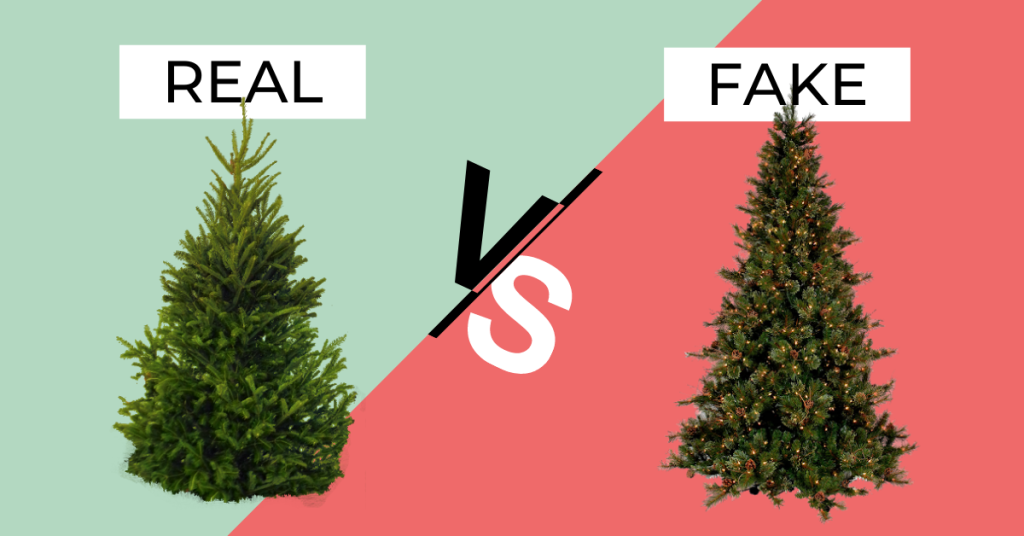
It’s no secret that Christmas is the holiday of connection. Millions of families on December 25th sit around a Christmas tree opening up presents, laughing together in the moment. A central piece of the holiday, 25-30 million Christmas trees are sold every year in the United States. A tricky decision is consequently raised: real or synthetic Christmas tree?
Real Christmas trees have significant environmental benefits because of their biodegradability and can be repurposed with mulch and fertilizer. Furthermore, Christmas trees replanted after Christmas in the bottom of rivers and lakes help support the aquatic habitat.
However, there are also notable downsides to real Christmas trees. On average, the carbon footprint of Christmas Trees is 13.5 kilograms if they are disposed of through wood chipping or burning. If left to degrade in a land fill though, the carbon footprint rises to an estimated 16 kilograms. The way pine trees are planted under high demand can also cause environmental damage. Pine trees need lots of pesticides and herbicide to grow in non native habitats which can harm other animals and plants in the area. Furthermore, the demand for Christmas trees in December causes an unsustainable number of Christmas trees to be planted to meet demand causing farmers to allocate many resources such as nutrients to nurture these plants. In the long run, without giving the soil a break, the depletion of nutrients will cause harm to other native plants in the area who are not getting resources from the farm.
On the other hand, synthetic Christmas trees also cause damage to the environment. While advocates for plastic trees might say that the reuse of plastic Christmas trees makes them sustainable, it will take at least 12 years of use per one plastic Christmas tree to be equal to the carbon emission of a natural pine. Artificial Christmas trees are also created by petroleum base plastics which are non degradable and non recyclable. This means that artificial Christmas trees end up contributing to the waste in landfills.
While real trees appear to edge out fake trees slightly, both real and plastic Christmas trees are evidently unsustainable options. There are still ways to be environmentally friendly while celebrating, however. Decorating a natural, native tree in your area is one environmentally friendly option. Using a real tree decreases carbon emission, helping the environment in the long term.
Work Cited
https://earth.org/real-vs-fake-christmas-tree-environmental-impact/embed/#?secret=BisYPMjV7k