
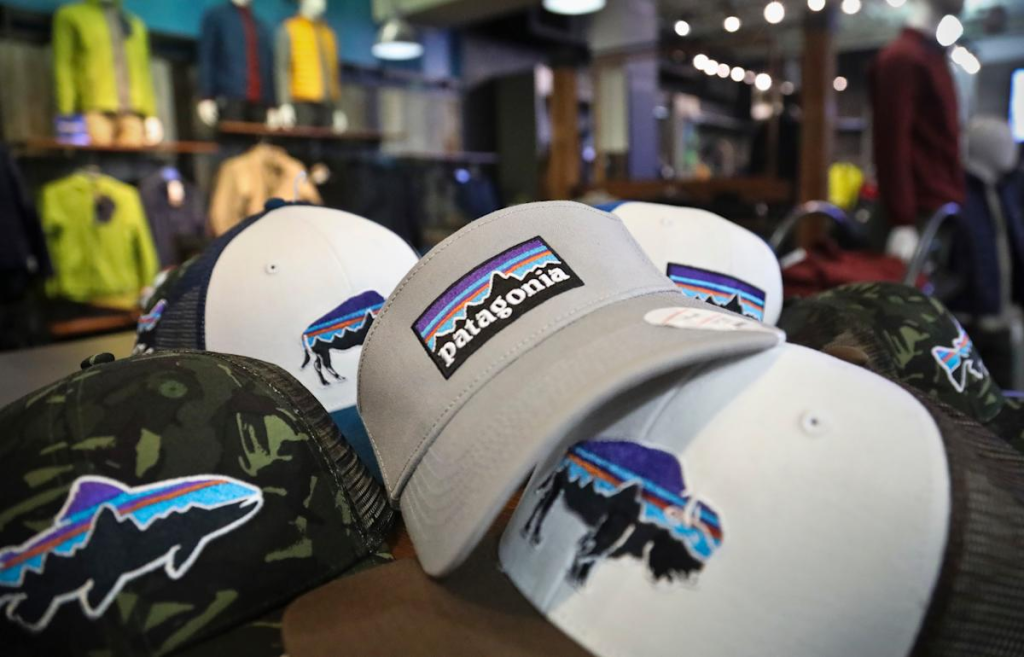
Picture hikers, climbers, and people who own at least one reusable bottle. Those same people are wearing Patagonia. It’s the brand of fleece jackets worn on misty mountain trails and windy beach hikes. Now picture young guys crossing the street in New York City in identical outfits and matching hairstyles. Patagonia went from layering against the cold to layering itself into corporate America. Somewhere along the way, Patagonia went from being a symbol of outdoor adventure and environmental activism to becoming a status symbol for the finance bros.
For years, investment bankers and interns adopted the Patagonia vest as their uniform. Paired with slacks and a button-down, the look became so common in New York’s finance jobs that it earned the nickname the “Midtown Uniform.” There was even a popular Instagram account dedicated to spotting finance bros in their daily attire. Patagonia, a brand built on rejecting corporate culture, had somehow become deeply embedded in a new symbol of American finance work life, where long hours, ambition, and quiet status are worn.
Patagonia’s founder, Yvon Chouinard, detests corporate America and has no “respect [for] the stock market at all” (Gelles 2025). A rock climber and blacksmith, Chouinard believed that businesses obsessed with profit were damaging the planet. He refused to take Patagonia public, rejecting massive buyout offers and avoiding outside investors because he did not want shareholders dictating his company’s values. To him, sustainability was not a marketing strategy but a commitment and responsibility.
Yet, Patagonia’s sleek, minimalist designs and reputation for quality made it attractive to tech and finance firms. Companies handed out Patragonia vests to interns as welcome gifts, many of which were worn for a few months and then forgotten. This disposable culture clashed directly with Patagonia’s mission of “environmentalism” and to “protect [the] home planet” by making products that last a lifetime (Patagonia 2022). In response, the company stopped selling many corporate vests in 2019, choosing its values over easy profit.
Patagonia has always been willing to challenge consumer culture. In 2011, it famously ran an ad that said, “Don’t Buy This Jacket,” encouraging people to think twice before purchasing. Then in 2022, Chouinard took things even further by giving away the company’s ownership to trusts and nonprofits that direct profits toward environmental protection.
Patagonia’s journey shows how even the most ethical brands can be absorbed by mainstream and corporate culture. But it also proves that companies can fight back. Whether on a forest trail or trading floor, Patagonia continues to serve as a reminder that values and clothing are deeply connected.
Patagonia—from Sustainable Brand to Symbol for Finance Bros
https://www.patagonia.com/core-values/