
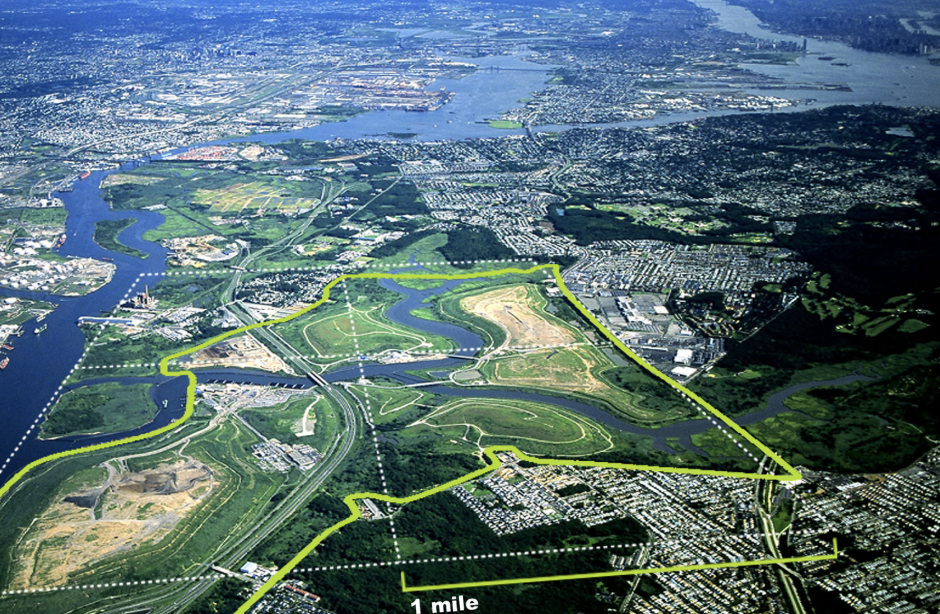
The transformation of Freshkills Park in Staten Island from a massive environmental burden to a successful public park is a compelling narrative of resilience and environmental imagination. Once the site of Fresh Kills Landfill—the world’s largest landfill at its peak, receiving up to 29,000 tons of trash per day and New York City’s primary dumping ground from 1948 until 2001—the property had been stigmatized as a “sacrifice zone.” The current sustainable efforts on Freshkills Park seek to prove that no site is truly a lost cause.
Then there’s the dramatic reversal: beginning in 2008 with a terminus of around 2036, a multi-phase reclamation project set in motion the landfill’s transformation into a 2,200-acre park—nearly three times the size of Central Park. In this broader reclamation, the recent “50k Violets” project is a powerful symbolic and practical step towards ecosystem restoration. Led by Freshkills Park Alliance, the initiative aims to plant 50,000 native violet plants across the site with the long-term goal of creating a healthy habitat for pollinators such as bees, monarch butterflies, and other insects essential to ecosystem health. Not only does the project beautify the reclaimed landscape, it actively weaves in sustainability: the former landfill is being utilized as a carbon-capture meadow, a habitat restoration zone, and a living lab for nature’s revival.
In addition, the redevelopment incorporates multiple layers of green infrastructure. This includes: landfill mounds being closed by capping with soils and liners; gas-venting and energy-recovery systems used to capture methane emissions and convert them to electricity; and wetland restoration along the site’s shoreline, which buffers Staten Island from flooding and sea-level rise. The 50k Violets project is consistent with these aspirations in restoring native grassland habitats and knitting together a previously degraded landscape back into the urban ecological matrix. The timing is auspicious: as the North Park sector (21 acres) debuted in October 2023, offering to the public walking and bike trails, bird-watching towers, and open meadows, visitors can witness the site’s conversion from refuse to refuge firsthand.
In sustainability terms, this is more than a park-opening story—it’s one of retooling the worst of urban environmental practice into generative, restorative green infrastructure. The violet plantings, when they bloom and bustle with pollinators, will signify not only recovery but a forward-looking vision of urban nature: one in which even post-industrial scars can be reconstructed to create ecosystem assets.
Sources
https://www.nationalgeographic.com/travel/article/freshkills-park-staten-island-new-york-city