
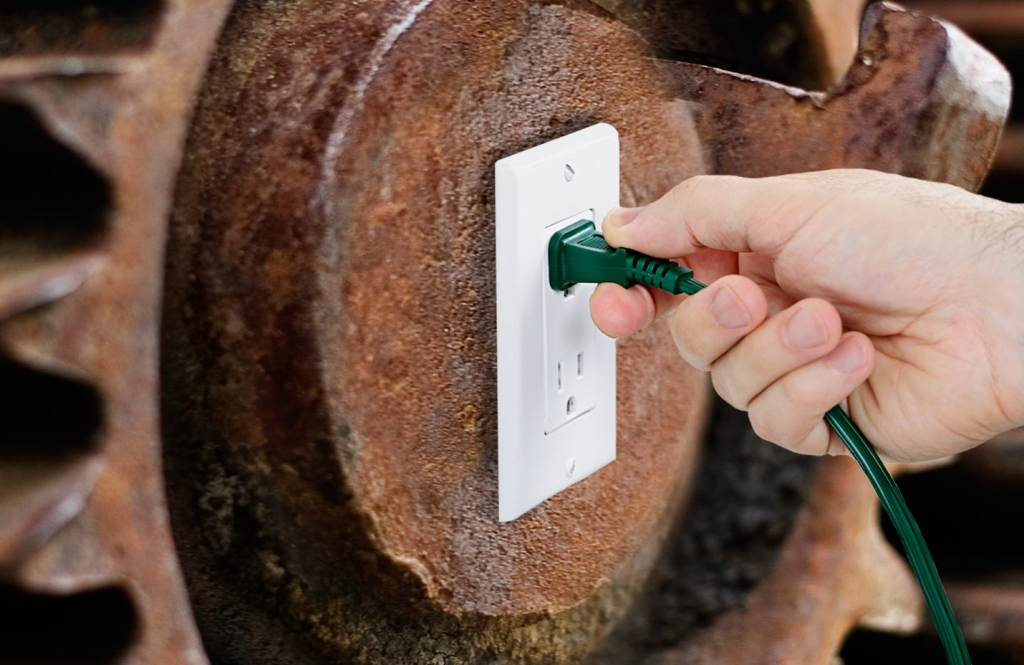
Rust is usually a sign of decay. But what if it could power the future?
In today’s world, there is a rising need for renewable energy sources However, while fossil fuels are clearly unsustainable, new challenges are posed with renewable energy sources. We can generate clean energy, but we cannot store it cheaply, cleanly, or reliably for long amounts of time and on large scales. A key limitation of renewable energy is that renewable energy sources don’t produce power on demand. For example, solar power only works when the sun shines, and wind power only works when the wind blows. Our 24/7 electricity needs require a steady income of power, making renewables unreliable in many cases. Even when clean energy is created, excess energy is wasted because there’s nowhere to store it for later because storage capacity is limited. Additionally, other options such as lithium-ion batteries have short durations, typically only providing around 2-4 hours of discharge, and they are not well suited for extended grid support. They also use scarce materials, are expensive, are hard to store for days at a time at grid scale, degrade over time, and can pose fire risks.
So where does rust come in? Recently, companies like Form Energy and Ore Energy have started building iron-air technology systems that can connect to power grids and help solve the problem. Iron-air batteries store energy in a process that works much like rusting, but in reverse, and discharges energy in a rusting process. Essentially, iron-air batteries work like this: when the battery is discharging power to the grid, it “breathes in” oxygen from the air, which reacts with the iron inside the battery to form rust (iron oxide), and the chemical reaction releases usable electricity. Then, to charge the battery, the process is reversed, and electricity is fed back into the system, which reverses the rust back to iron, and oxygen is released. This ingenious system is highly advantageous for energy because it allows for long duration storage, has low cost potential, and uses abundant, nontoxic, and safe materials. Iron-air batteries can hold energy for over 100 hours, allowing for long duration storage. Additionally, iron-air batteries rely on just that: iron and air. This is a huge advantage because due to the innovation using some of the most abundant elements on Earth to perform a safe, mostly unhazardous process, the cost of the materials decreases to around $20/kWh (a fraction of that of lithium-ion), and safety increases. With this process, there is little to no risk of fires, and the batteries also use non-toxic components. Iron-air technology also offers environmental benefits due to the avoidance of scarce resources and the increase of easily recyclable materials, aligning with the interests of saving the Earth while keeping our electricity-powered world running.
Currently, projects utilizing this technology are already in operation, such as those conducted by Ore Energy in the Netherlands, and Form Energy in the US. However, these batteries are not yet suitable for smartphones or electric vehicles, and the iron-air technology is heavy, bulky, and still relatively inefficient when compared to lithium-ion. The technology is still in its developmental stage and requires more improvements. That being said, it is a breakthrough asset for power grids, and the future of iron-air technology holds significant promise for delivering more reliable, affordable electricity and transforming how clean energy is managed and stored across regions and varying weather conditions.