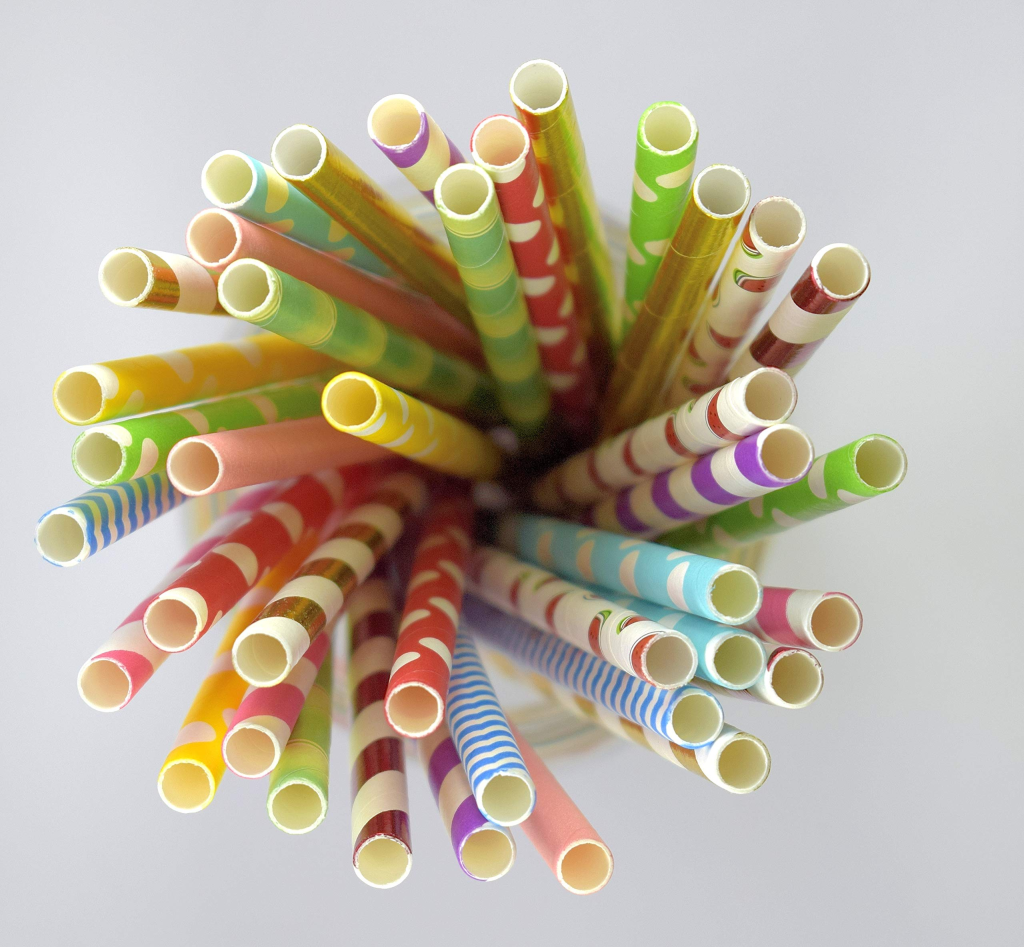
Over the past few years, plastic straws have become an emblem for plastic pollution across the world. Fueled by a viral video of a sea turtle with a 4-inch plastic straw up its nose, the backlash against plastic straws has resulted in initiatives by companies and food chains to utilize the more greener, sustainable alternative – paper straws. At first, it seemed like the quick and easy solution to reducing plastic pollution. However, recent research has suggested that paper straws may not be as great as we think.
Plastic straws have long been known to be harmful to the environment, specifically marine life. Made from polypropylene, a type of material both durable and moisture resistant, plastic straws can take up to 200 years to decompose. On average, 500 million straws are used each day, causing mass amounts of plastic to accumulate in landfills, oceans, and beaches. It becomes evident that such a small, everyday item can have a significant impact on ecosystems, illustrating the need for a profound solution. Thus, companies and consumers turned to paper straws as an alternative, hoping that it would make a change for the better.
Paper straws were introduced as the hero of the story – a greener, more sustainable version of the plastic straw. Unlike plastic straws, paper straws are biodegradable, therefore decomposing faster and minimizing their time in the environment. In fact, according to the UK Environment Agency, paper straws have the ability to decompose in 2-6 weeks, a stark comparison to that of plastic straws. However, it is also known from consumer experience that paper straws are more flimsy and often dilute in extended periods of contact with water, making it disgusting to use. Furthermore, recent research has uncovered the truth that paper straws might not be as sustainable as we think.
A study done by researchers at the University of Antwerp, Belgium found that paper straws contained chemicals like perfluoroalkyl and polyfluoroalkyl substances (PFAS), which are used to make the paper straws stronger and water resistant. These chemicals are harmful both to the environment and to the consumer, including the fact that they stay in the environment for decades, contaminate water supplies, and pose health concerns. Often referred to as “forever chemicals,” PFAS cannot break down easily, and are found accumulating in the environment, food, water, and even living organisms. This raises the concern that despite being marketed as eco-friendly, paper straws hold drawbacks and introduce new forms of pollution rather than preventing it.
Additionally, paper straws cannot be recycled because of their thickness. A BBC article about McDonald’s paper straws stated that in response to customer complaints about how the paper straw “dissolved before a drink could be finished,” McDonald’s had made it thicker to improve durability. However, the increased thickness made it difficult for the straws to be processed and recycled. McDonald’s serves as just one example of how the overall performance of paper straws, though intended to be more sustainable, often fail to meet its expectations in practice. As a result, the hype surrounding paper straws as a solution to plastic waste has been largely overstated, revealing that simply switching materials does not necessarily create a more sustainable world.
So why has there been so much positivity towards the idea that, in switching from plastic to paper straws, we can truly reduce plastic pollution? That question seems to remain unanswered as research and articles continuously counter the effectiveness of paper straws in sustainability. However, as Erin Simons, the vice president for plastic waste and business at the World Wildlife Fund, pointed out, the anti-plastic straw movement wasn’t about magically solving the problem of plastic pollution by swapping plastic for paper. Rather, it was about showing that even a small change, like choosing a different straw, can make a difference when multiplied across many individuals. Big issues like plastic pollution can only be tackled when everyone joins the effort.
Sources
https://www.bbc.com/future/article/20231103-plastic-or-paper-the-truth-about-drinking-straws